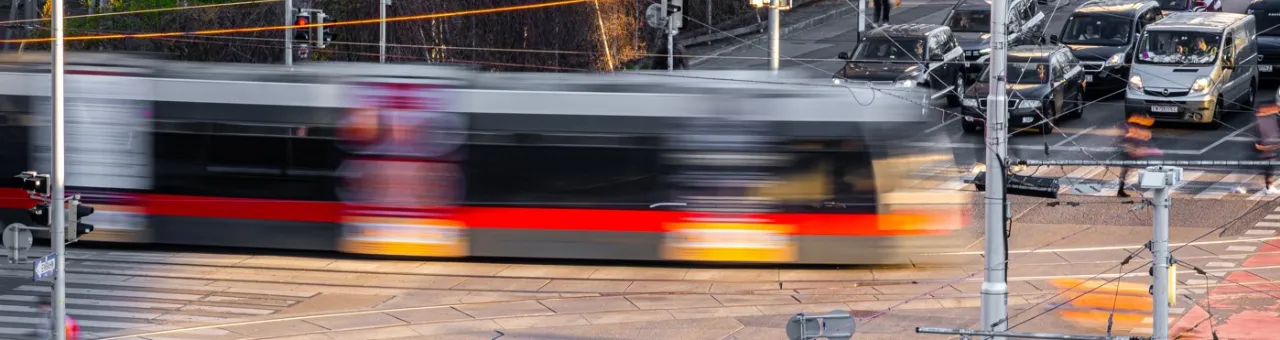
Faster buses and trams: acceleration campaign for Vienna's public transport
Here it gets faster:
Line D: First speed-up measures implemented, further measures in planning
6 of more than 20 planned measures have already been implemented on Line D. Overall, the line is expected to be accelerated by up to 3 minutes per direction – up to 6 minutes in total.
Among the measures already in place is a new, public-transport-prioritised traffic light system at the Canettistraße/Arsenalstraße intersection. This allows trams to save a total of around 4 minutes in both directions.
The traffic signal at Heiligenstädter Straße/Sickenberggasse has also been adjusted, giving trams earlier green phases and reducing waiting times.
Further measures have already been approved and will be implemented shortly. In Prinz-Eugen-Straße, between Goldeggasse and Weyringergasse, a parking restriction will be introduced. This will separate cars from the tracks earlier and allow smoother turning movements, improving overall flow.
Improvements will also be made in Heiligenstädter Straße in Döbling. Between Radelmayergasse and Gunoldstraße, so-called “Stuttgart kerbs” (track separation elements) will be installed. These clearly separate traffic lanes, ensuring that cars travel alongside the tram tracks rather than across them.
At Kärntner Ring (near Kärntner Straße), additional measures will increase speed: the green phase will be extended by 20 seconds, allowing two trams instead of one to pass the intersection. In addition, a dedicated right-turn lane into Kärntner Straße will be created for cars, preventing turning vehicles from blocking tram operations. These measures benefit lines D, 1, 2 and 71.
From 13 July, the “Parlament” stop will no longer be served. The surrounding stops are only around 200 metres apart and are significantly more frequently used. The nearest stop, “Ring, Volkstheater U”, is also a major interchange hub for lines U3, 46, 49, 1, 2, 71, D and 48A. To ensure that the Parliament remains clearly visible in the Wiener Linien network map and easily recognisable for passengers, the stop “Ring, Volkstheater U” will be renamed “Parlament, U Volkstheater”.
By removing one stop, the tram saves around 30 seconds per direction on average, while operational stability is improved. In total, this results in time savings of more than 200,000 operating hours per year for passengers on the Ring lines. The waiting shelter from the former “Parlament” stop will be reused sustainably. It will be relocated to the “Volkstheater” station on Line 49.
Line O: Acceleration underway, speed improvements at up to 30 locations
In parallel, Line O is already being significantly improved to ensure higher reliability and faster operations during the ÖBB mainline closure. In total, up to 30 potential acceleration measures have been identified, with the first already implemented.
At the Landstraßer Gürtel/Fasangasse intersection, a new traffic signal programme has been introduced. This reduces waiting times for trams in both directions noticeably.
In Radetzkystraße, recurring issues caused by improperly parked vehicles blocking tram operations have been addressed through clearly marked parking spaces.
Additional steps have already been defined and will follow shortly.
In Ungargasse, a parking restriction will be introduced before the intersection with Invalidenstraße. This will separate car traffic from the tram tracks earlier and prevent congestion on the line. Previously, trams lost up to 1.5 minutes at this location. In future, Line O will be able to run much more smoothly in the direction of Bruno-Marek-Allee.
In addition, the roadway in Fasangasse before Rennweg will be adjusted to prevent backlogs on the track area. This measure ensures that cars are guided away from the tram corridor earlier, further improving operational flow.

Public transport to become even more attractive
Although Wiener Linien has already done a lot to ensure that buses and trams can travel quickly through the city, public transport is still frequently slowed down:
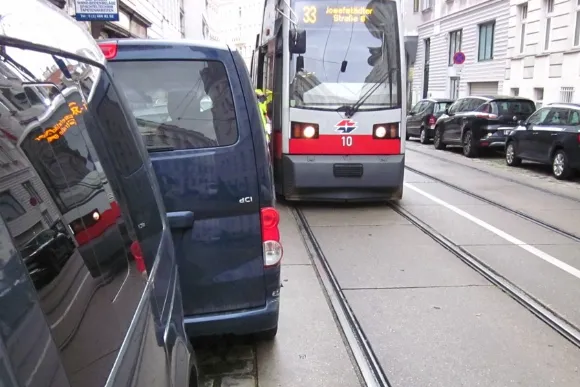
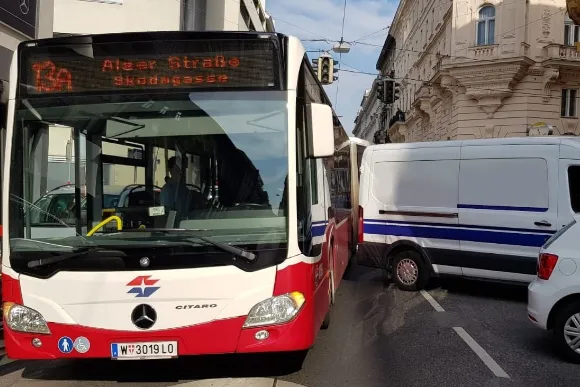
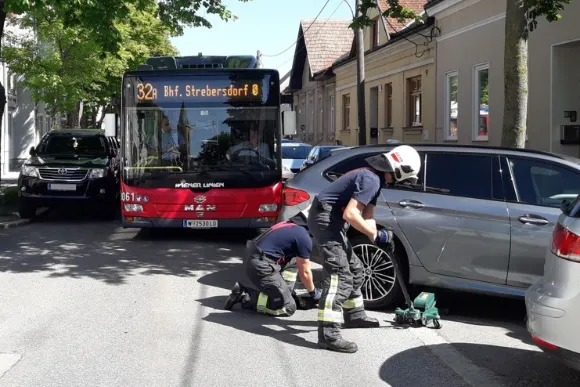
- On average, four times a day, illegally parked cars block our buses and trams. Public transport can only pass once the vehicle has been removed. This results in delays, disrupted intervals and many angry public transport passengers.
- Vehicles that turn immediately in front of a tram or cross the road force the tram to brake, causing delays.
- In road traffic, buses leaving a stop often have to wait until they can merge into the flow of traffic, or they get stuck in traffic jams.


Speeding up public transport
With its dense network, frequent intervals and high reliability, Vienna is internationally regarded as a model for public transport. Delegations from all over the world look to the Vienna model. The acceleration campaign now marks the next step in quality and efficiency. In future, buses and trams will only stop at bus stops where possible and will otherwise be able to travel quickly along the route. Under the motto ‘More speed for buses and trams’, experts and departments of the City of Vienna and Wiener Linien are working together on a large-scale acceleration initiative. This expands the ‘Netz erst recht!’ initiative, because a stable, reliable operating network consists of both modern infrastructure and a reliable service.
Priority for many instead of congestion for all
We are analysing 29 tram lines and 135 bus lines to find ways to speed up travel. We are implementing targeted measures to ensure that public transport passengers can get around faster. Plans include additional traffic light priority and green waves for buses and trams, the elimination of critical public transport bottlenecks, the adjustment of turning lanes for motorised private transport, and the creation of additional dedicated bus and tram lanes.
Turning illegal parking hotspot into liveable green spaces
Our picture gallery shows what it looks like when illegal parking hotspots are eliminated, using the example of Kreuzgasse in the 18th district: where cars used to jam and block the tram, flowers now bloom and trees provide shade. The elimination of illegal parking hotspots not only pleases public transport passengers, but also has many advantages for local residents. This can also be seen in Camillo-Sitte-Gasse in the 15th district: where cars used to be parked (illegally) or stuck in traffic jams, there are now green spaces. The concrete and asphalt road has been unsealed and planted with tall shrubs. Wider pavements, a drinking fountain and four benches make it a pleasant place to spend time. Asphalt and traffic jams have been transformed into liveable green space.
-
Kreuzgasse, 18th district: Illegal parking hotspot eliminated© Christian Fürthner/MA28Green space instead of illegally parked cars -
Kreuzgasse, 18th district: Illegal parking hotspot eliminated© Christian Fürthner/MA28Free passage for trams instead of illegally parked cars blocking the way -
Kreuzgasse, 18th district: Illegal parking hotspot eliminated© Christian Fürthner/MA28Make way for the tram! -
Kreuzgasse, 18th district: Illegal parking hotspot eliminated© Christian Fürthner/MA28Flower meadows and fast public transport instead of illegally parked cars blocking the road
Wiener Linien Customer Service
-
Do you have questions about your ticket? Have you been found without a valid ticket and have to pay an additional fee? Do you have questions or problems when buying tickets online? Whatever concern you have: We are happy to take care of it!
Get in touch with us
-
Handle your request online: Visit our Help Center
-
Find an office: Offices & opening hours
-
Call our customer hotline: +43 1 7909 100